Black Skin And Electrolysis
Both black women and men benefit from electrolysis treatment because the inflammation and acne that accompany the growth of curly facial hair improves greatly after treatment. Information on the relationship between black skin and electrolysis is crucial because of the unique nature of black hair.
Prior to working with black skin and electrolysis I did not realize the damage hair does to the skin. Curly hair is especially impacted if the hair is cut because the blunt edge is razor sharp going into the skin. Then come the bumps, the lumps and the dark spots that won’t go until the hair is gone for good.
The ideal thing to do is to not cut the hair and just remove it with electrolysis.
Black Skin Prior To Electrolysis
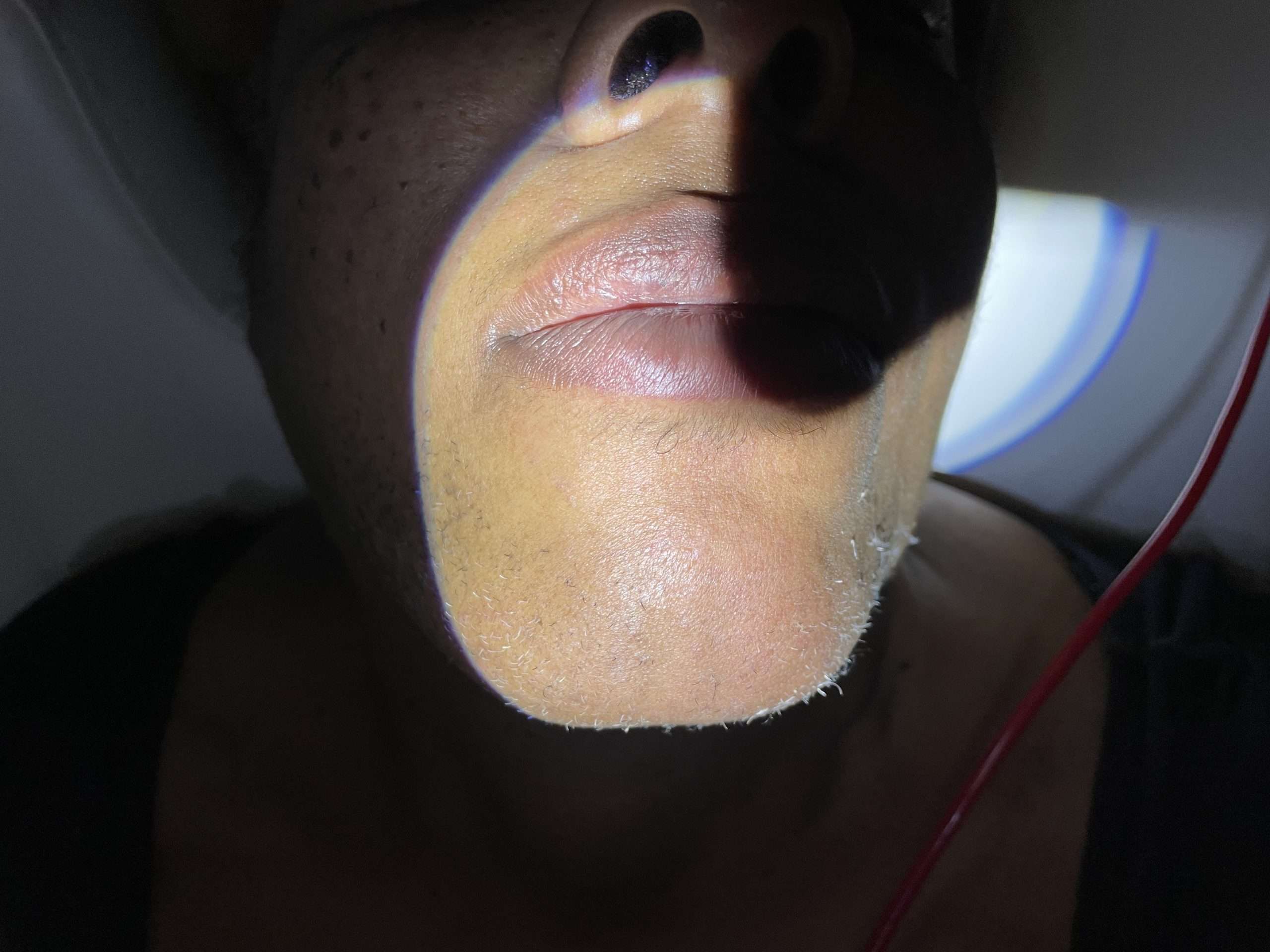
The image below shows the common skin condition among my black clients. The coarse hair growth produces pigmentation issues, bumps and general discomfort in the inflamed follicles. Some coarse male beards even cause infections in the follicle.

Black male beard prior to start of electrolysis treatment.
Hyperpigmentation is evident in the follicles that produce hair. The bumps are ingrown hairs or pimples caused when the ends of the clipped hair curl around and poke back into the skin. The skin irritation clears up once the hair is gone. The C-shaped hair follicle is unique to black hair/skin and is not treated effectively with thermolysis. I repeat: Black hair is not best treated with thermolysis. The blend is the best method, and it is essential for type 4 curly hair. Black clients often have a range of hair textures on the face. Straight, C-shaped, S-shaped, corkscrewed or culicued follicles often exist on one face, therefore, it is imperative you see someone who understands the variation in black hair textures.
Myths About Black Skin And Electrolysis
- A risk of scarring. This is false. The skin improves once the hair is gone. No more irritation, no more bumps. Hyperpigmentation caused by curly facial hair improves once treatment ends.
- Risk of hypertrophic scarring (often referred to as keloids although they are not the same). There is no relationship between black skin and electrolysis and keloids. I’ve seen one client with a keloid in my 15 year career. I treated up to the edge of the keloid on her chest and it did not affect the skin in a negative way.
- Black hair is difficult to treat. Black skin has a range of hair textures across the cheeks, chin, sideburns and neck. Type 4 coily hair takes the most skill to treat effectively but the same results are possible as with straight hair. The success lies with the skill of the electrologist.
Black Skin And Electrolysis Aftercare
Proper aftercare is essential for clients of all ethnicities but black clients especially have to follow my strict aftercare routine. Your skin will look pristine between appointments if you follow my advice. If you do not follow my instructions you will end up with prolonged swelling and scabbing.
Black Skin And Electrolysis Case Study
I’m proud of the work I’ve done on my client because it is an accomplishment to permanently remove a full female beard in 6 months. The real triumph is to do that on type 3 or type 4 curly hair, a hair texture found only on people of African descent. Treating black hair requires impeccable electrolysis technique and a true understanding of what’s going on beneath the skin.
I started Y. in October when she presented with a full face of coarse, curly hair. As with most clients the hair growth caused dark pigmentation on her face. Y’s hair was more than 50% white and dense across the chin, neck, jawline, cheeks and upper lip. By March of the following year we were down to monthly touch ups. 7 months after her start date she was not in my regular rotation anymore. (Unfortunately pictures are horrible, we are 2 Gen X-ers who don’t chronicle our lives with our phones!)

Black Skin and Electrolysis – Electrolysis Aftercare Is Mandatory
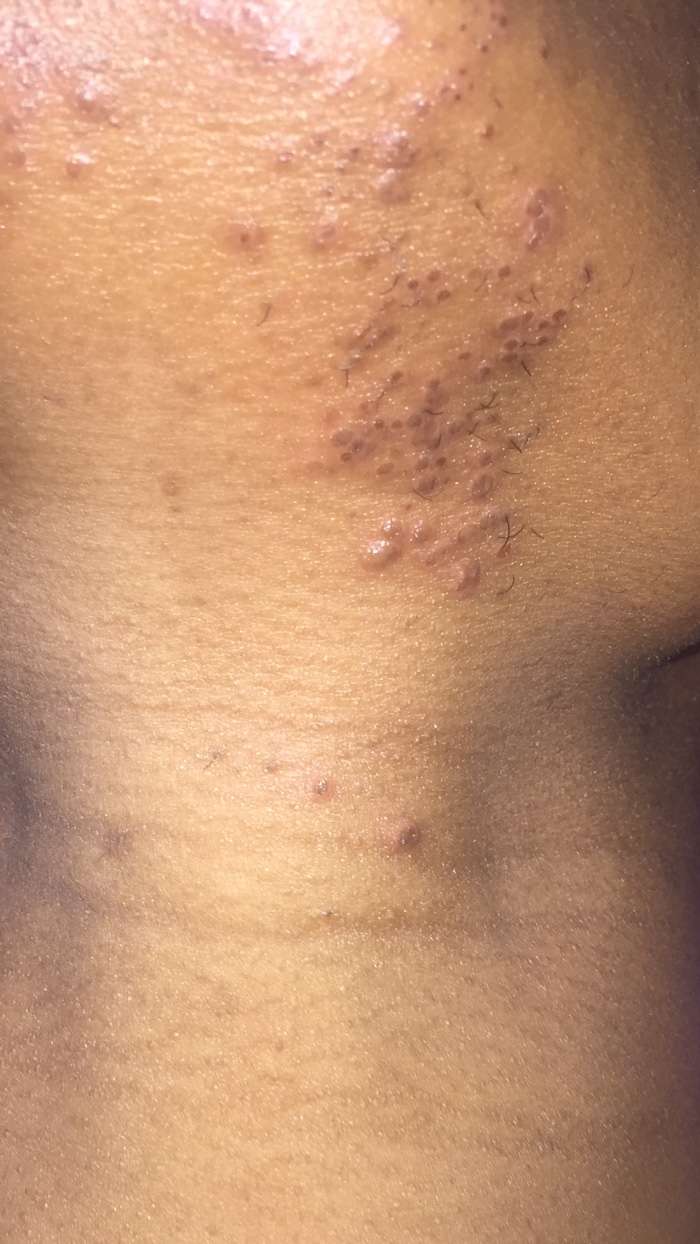
This image shows the result of not following my electrolysis aftercare instructions. The results of electrolysis are predictable, and so are the side effects. I advised this client to go home and do an epsom compress for a minimum of 1 hour immediately. Instead she did nothing to her skin. As soon as she started icing and epsom salting her skin the swelling went down and the scabbing cleared up within a day. All skin recovers quickly from electrolysis with proper aftercare, my electrolysis aftercare routine is mandatory for black skin.
Summary: Black Skin and Electrolysis
To summarize, the results of electrolysis on black skin are amazing. Once you permanently remove the hair you will no longer experience painful ingrowns or the hyperpigmentation and bumps that go along with ingrown hair. Your complexion will be brighter and smoother because the hair that irritated the follicle is no longer there. Black hair cannot be treated effectively with thermolysis because of the specific C-shaped follicle that does not exist in other ethnicities. Black clients must follow strict electrolysis aftercare routines to reduce swelling and to minimize the likelihood of red dots or white pimples presenting at the follicle opening. Facial hair on both black men and women, as well as bikini lines, underarms, the back of the neck, and anywhere coarse hair is causing discomfort can be treated. If you come to me (Follikill!) you will be amazed at how quickly you see results. You do not have to come weekly either, but you do have to stop tweezing or waxing and you will have to follow my aftercare advice.
Post Inflammatory Hyperpigmentation Following Electrolysis Or Laser